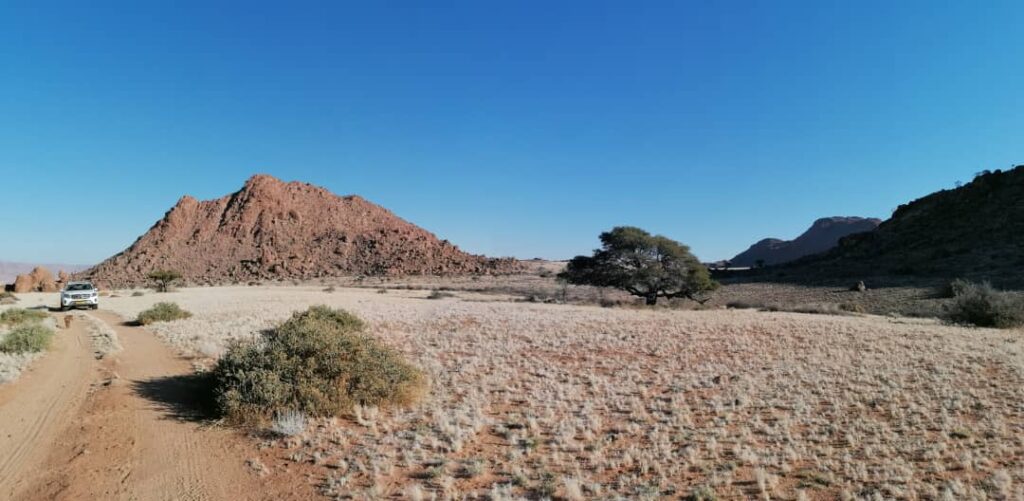
The Silent Decline of Namibia’s Camelthorn Trees
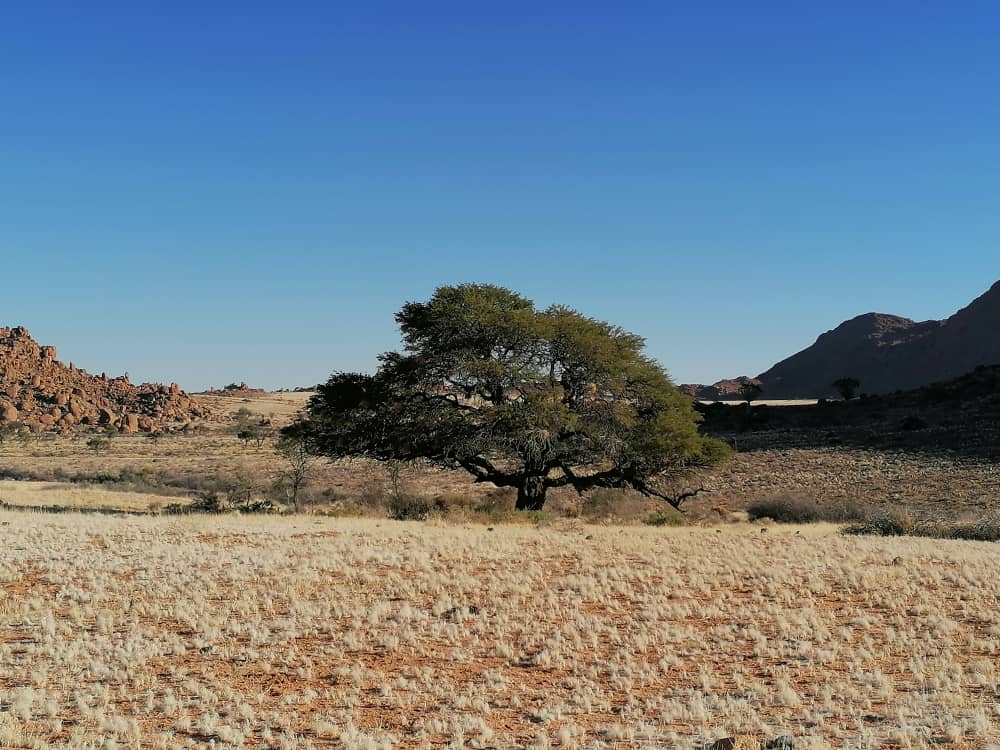
A Call to Protect One of Namibia’s Most Important Natural Treasures
Namibia is a land of extraordinary beauty — vast landscapes, endless skies and ancient trees that have endured some of the harshest conditions on Earth.
Among them stands the magnificent Camelthorn tree (Vachellia erioloba), one of the most recognisable and ecologically important trees of Southern Africa.
For generations, these trees have provided food, shelter, nesting places and protection for wildlife. They form an essential part of Namibia’s natural ecosystems and are deeply woven into the character of our landscapes.
But today, many of these remarkable trees are showing worrying signs of decline.
And once an ancient Camelthorn is gone, it cannot simply be replaced.
What Is the Problem?
Across parts of Namibia, Camelthorn trees are showing signs of twig yellowing, branch dieback and gradual canopy decline.
The process can begin almost unnoticed. Individual branches or twigs lose their vitality, become yellow, dry out and eventually die. Over time, the affected areas can become more extensive, leaving trees visibly weakened.
This is particularly concerning when we consider the age and growth rate of these trees. Camelthorns are slow-growing and can take many decades — and in some cases centuries — to become the magnificent trees we see today.
The loss of an old Camelthorn is therefore not simply the loss of a tree.
It is the loss of decades or centuries of growth, habitat and ecological value.
What Are We Seeing?
One of the most concerning symptoms is twig yellowing followed by dieback.
Affected trees may show:
- Yellowing of individual twigs and branches
- Drying and death of branches
- Progressive canopy thinning
- Branch dieback spreading over time
- A general decline in the vitality of the tree
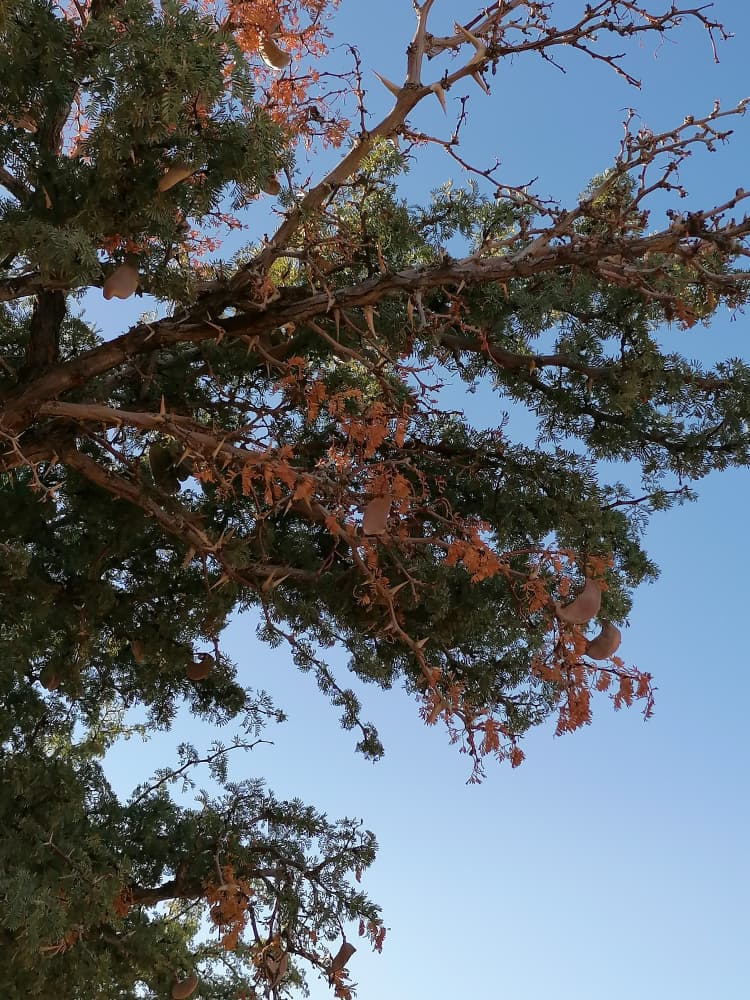
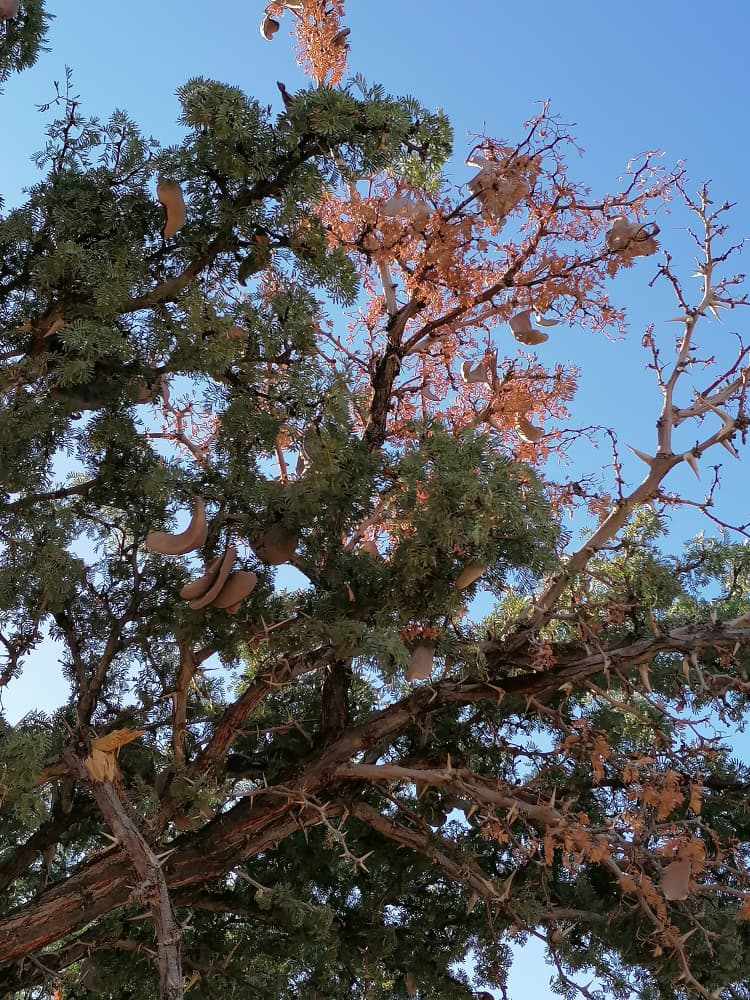
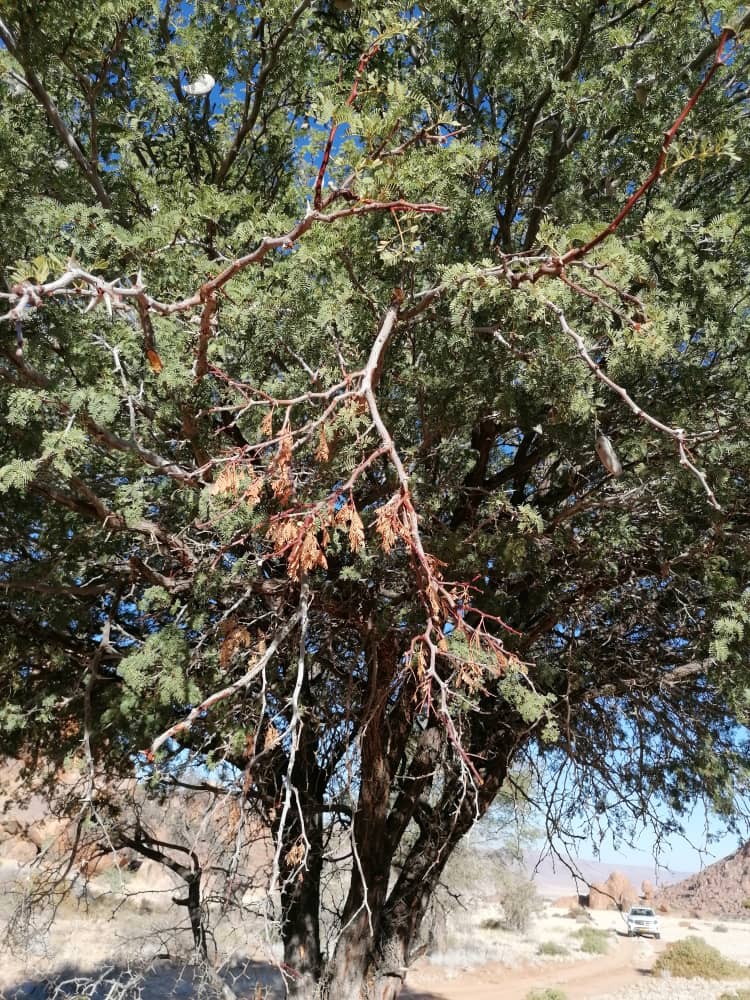
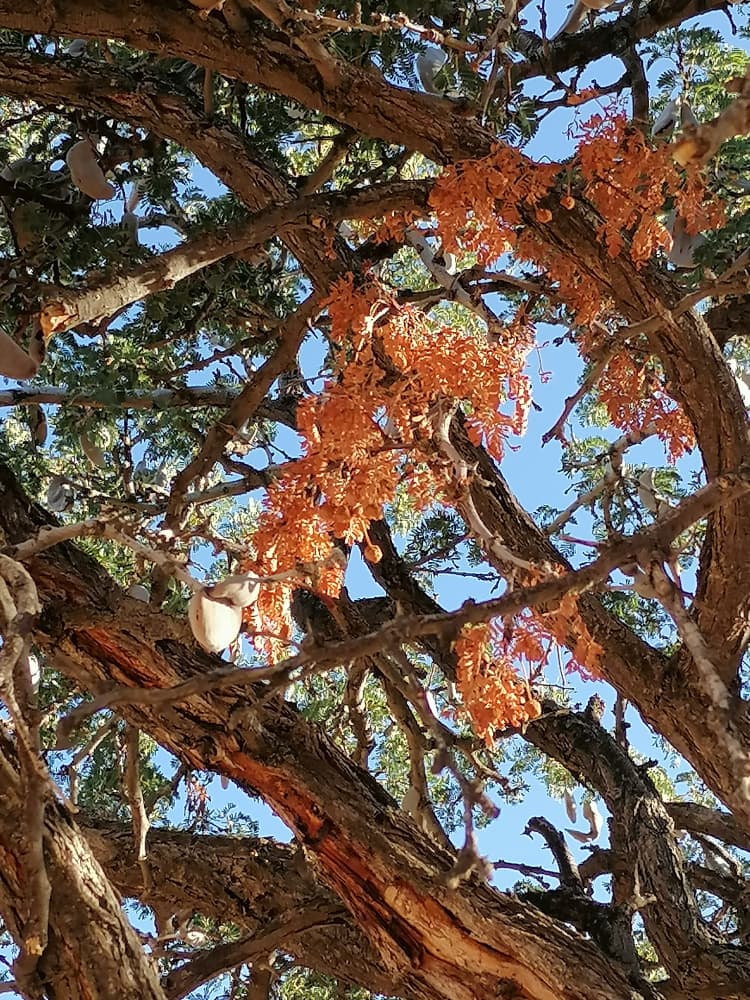
In Namibia, this phenomenon has been associated with the presence of the fungus Ampelomyces sp.
However, it is important to be scientifically responsible about what we currently know.
What Is Causing It?
At present, detailed scientific research into this phenomenon and its underlying causes is still limited.
The presence of Ampelomyces sp. has been observed in association with affected trees and is therefore believed to be one possible contributing factor.
However, it has not yet been conclusively established that the fungus alone is responsible for the decline.
It is entirely possible that several factors are interacting.
These could include fungal infection together with:
- prolonged drought and water stress;
- increasing environmental pressure;
- changing climatic conditions;
- soil conditions;
- insect or other biological activity;
- physical damage to trees; and
- the general stress experienced by trees growing in an increasingly challenging environment.
In other words, we do not yet have all the answers.
But what we can see is that something is affecting these trees — and that deserves our attention.
Why Does This Matter?
A Camelthorn is far more than a tree providing shade.
It is a living ecosystem, supporting an extraordinary variety of life in one of the world’s harshest environments.
🌿 A Vital Source of Food
The Camelthorn provides an important source of food for wildlife. Its pods and leaves are utilised by a variety of animals, particularly during periods when other food sources are scarce.
Its pods can provide valuable nourishment, while its foliage contributes to the diet of browsing animals.
🐦 A Home for Birds
Camelthorn trees provide nesting sites, shelter and protection for many bird species. Their branches and canopy create valuable habitat in landscapes where suitable trees may be few and far between.
An old Camelthorn can therefore support an entire community of birds throughout its lifetime.
🐝 A Haven for Insects and Other Wildlife
The tree also supports insects and countless smaller organisms that form an essential part of the food chain.
These insects, in turn, provide food for birds, reptiles and other animals, creating a complex web of life around a single tree.
🌱 An Important Part of the Ecosystem
Camelthorns contribute to the health and stability of the ecosystem around them. Their presence influences the soil, provides organic material and creates conditions in which other plants and organisms can survive.
A mature tree can effectively become a small ecological hub, supporting life far beyond its own branches.
☀️ Shelter and Protection
And, of course, the Camelthorn provides something that is priceless in Namibia: shade and shelter from extreme heat.
For wildlife, this can provide a place to rest, escape the intense sun and seek protection from harsh environmental conditions.
🏜️ A Symbol of Namibia’s Natural Heritage
The Camelthorn is also part of the identity and character of Namibia itself.
These magnificent trees have survived generations of drought, heat and environmental change. Some have stood for many decades or even centuries.
When one of these trees dies, we do not simply lose a tree.
- We lose food.
- We lose habitat.
- We lose biodiversity. We lose shelter.
- We lose part of an ecosystem.
- And we lose a piece of Namibia’s natural heritage.
That is why protecting the Camelthorn matters.
And that is why understanding what is happening to these trees — and supporting their future regeneration — is so important.
What Can We Do?
We believe that awareness is the first step towards protection.
The Nature Awareness Project aims to raise awareness of this concerning phenomenon, encourage observation and documentation, and support practical conservation efforts.
While researchers and environmental specialists continue to learn more about the causes of Camelthorn decline, we can already take action to support the next generation of trees.
One important part of our initiative is the planting of young Camelthorn trees (Vachellia erioloba).
By planting new trees today, we are investing in Namibia’s landscapes of tomorrow.
A small seedling may look insignificant compared with a centuries-old Camelthorn.
But every ancient tree was once a seedling.
Planting for the Future
The Nature Awareness Project is committed to helping counteract the loss of Camelthorn trees by supporting the planting and nurturing of young trees.
Our goal is not only to replace trees that may eventually be lost, but to create a greater awareness of the importance of Namibia’s indigenous trees and encourage people to become actively involved in protecting them.
Every tree planted represents hope.
Hope for wildlife. Hope for our landscapes. Hope for future generations.
And hope that the children of tomorrow will still be able to stand beneath the shade of a great Camelthorn and experience the same sense of wonder that we feel today.
How You Can Help
Conservation does not always begin with a large organisation or a major project.
Sometimes, it begins with one person caring enough to plant one tree.
And then another person does the same.
Together, these small actions can become something much bigger.
Your support can help us plant young Camelthorns, raise environmental awareness and contribute to the protection of Namibia’s natural heritage.
We may not yet know exactly why these trees are declining. But we do know that they are worth protecting.
Protected Today — Let’s Not Wait Until It Is Too Late
The Camelthorn (Vachellia erioloba) is a protected tree species in Namibia. Its protected status recognises its importance to Namibia’s natural heritage and the ecosystems it supports.
But being protected does not mean that we should wait until there is an irreversible problem.
The Camelthorn is not currently classified as an endangered tree in Namibia. Nevertheless, the signs of decline we are observing deserve our attention, awareness and action.
Protection begins long before a species reaches a point of crisis.
It begins with noticing.
It begins with asking questions.
It begins with understanding what is happening in our environment and supporting the research and conservation efforts needed to protect it.
Let’s Not Wait Until It Is Too Late
We still have the opportunity to act while these magnificent trees are standing.
We can observe and document what is happening.
We can support further research.
We can protect existing trees.
And we can plant young Camelthorns today so that future generations will continue to have these remarkable trees as part of Namibia’s landscape.
We do not need to wait until the Camelthorn is endangered to care about its future.
By the time a tree species reaches a critical point, it may already be too late to reverse decades of loss.
The time to protect Namibia’s Camelthorns is now.
🌱 Support the Nature Awareness Project
The Nature Awareness Project is committed to raising awareness and supporting the planting of young Camelthorn trees (Vachellia erioloba).
If you would like to support this initiative, please click the link below to make a donation.
Every contribution helps us take practical action today — for the trees, for the wildlife that depends on them, and for the generations who will inherit Namibia’s natural landscapes.
Let’s not wait until it is too late.
Let’s protect what we still have.
Let’s plant what will come next.
Let’s give Namibia’s Camelthorns a future.
One tree. One ecosystem. One future.
Together, we can make sure that Namibia’s Camelthorns continue to stand tall.